뉴캐슬병은 파라믹소바이러스에 의해 발생하는 전염성이 매우 높은 바이러스성 질병입니다. 주로 병든 닭에서 호흡곤란, 설사, 신경계 이상, 점막 및 장막 출혈로 나타납니다. 감염되면 폐사율은 90%에 달할 수 있습니다. 상업용 가금에서 발생 시 높은 폐사율과 심각한 경제적 손실을 초래하기 때문에 세계동물보건기구(WOAH)에 보고해야 하는 질병입니다. 따라서 양계 농가에서는 뉴캐슬병 예방과 치료에 각별히 힘써야 합니다. 작은 실수 하나가 큰 손실로 이어질 수 있기 때문입니다. 이제 뉴캐슬병에 대해 알아보겠습니다.
가금에서 나타나는 뉴캐슬병 증상
- 갑작스러운 폐사 및 높은 폐사율
- 산란율 급감. 달걀의 색, 모양 또는 표면이 비정상일 수 있으며 난백이 물처럼 묽을 수 있습니다.
- 호흡 곤란, 재채기, 기침, 헐떡거림
- 목 비틀림, 빙빙 돌기, 떨림, 경직, 경련, 침울, 신경 증상
- 날개 처짐, 깃털 부스스함
- 사료 섭취량 감소
- 활동량 감소
- 눈과 목 주변 부종
- 수양성 설사
닭 무리에서 위의 징후 중 하나라도 발견된다면, 독력이 강한 뉴캐슬병이 닭을 공격하고 있을 수 있습니다. 다음과 같은 부검 병변을 확인하여 일차 진단을 내릴 수 있습니다:
- 후두 부종 또는 점상 출혈;
- 선위 유두 부종, 출혈 또는 궤양;
- 십이지장 하행부, 난황관 앞뒤 2-3cm 부위 및 회장 림프 여포의 부종 또는 경미한 출혈;
- 직장의 솔 모양 출혈.
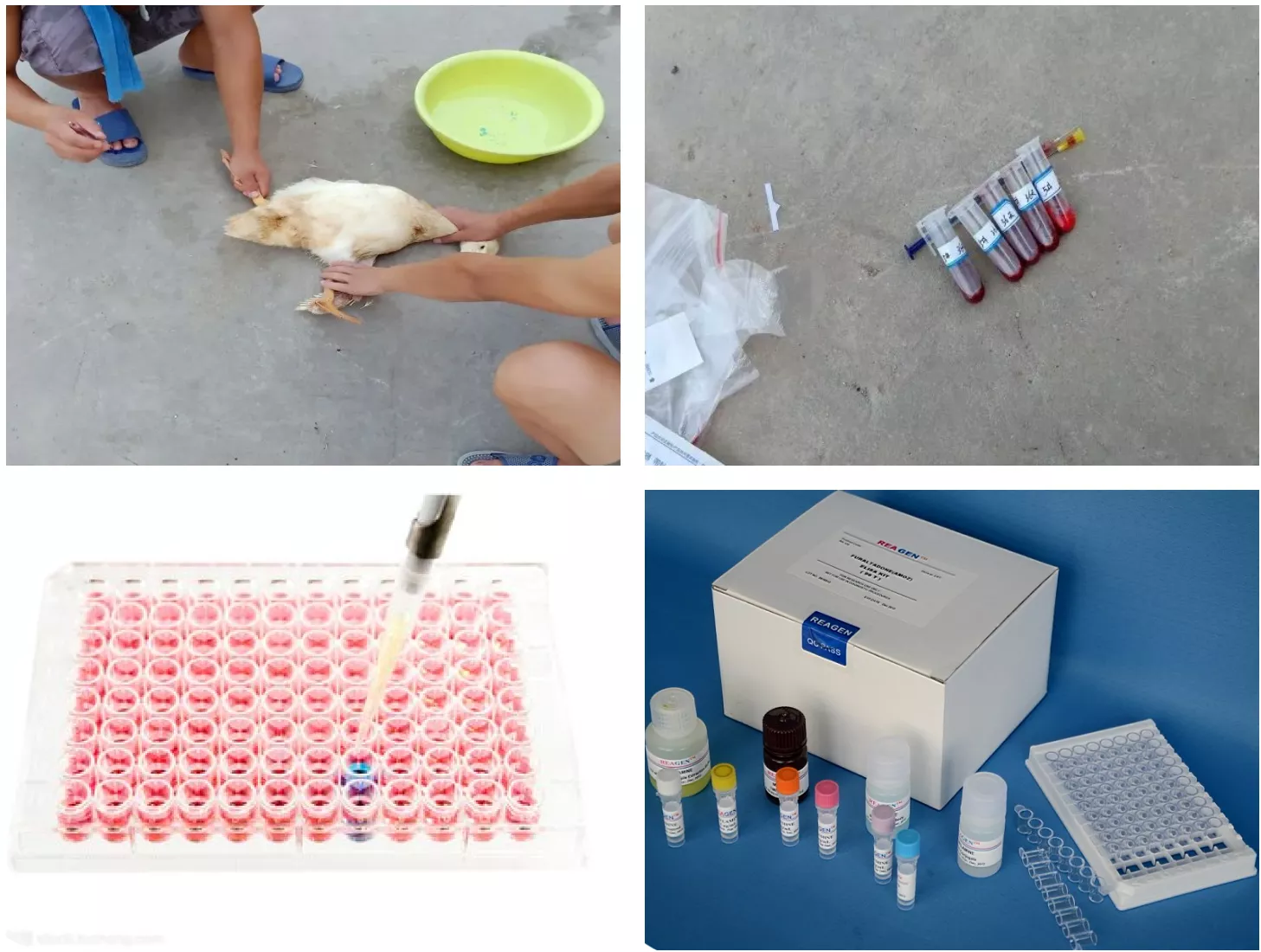
물론 진단은 바이러스 분리, RT-PCR 또는 면역조직화학 염색 검사법을 통한 바이러스 검출, 그리고 혈청학적 검사를 통해 확인되어야 합니다.
뉴캐슬병 감염 물체
- 뉴캐슬병은 모든 연령과 품종의 닭을 감염시킵니다. 어린 새는 나이 든 닭보다 발병률과 사망률이 현저히 높습니다. 또한 순종 닭은 더 취약하고 사망률이 더 높습니다.
- 이 질병은 연중 발생할 가능성이 있으며, 특히 봄과 겨울에 발생률이 높습니다.
- 이 질병은 매우 빠르게 확산되어 많은 가금류가 아무런 증상 없이 폐사합니다. 또한 사실상 모든 새가 2~6일 이내에 감염됩니다.
뉴캐슬병 전파 경로
이 질병의 주요 감염원은 병든 닭과 보균 닭의 분변 및 구강 점액입니다. 또한 바이러스 확산의 잠재적 경로도 몇 가지 있어 이에 대한 충분한 주의가 필요합니다.
직접 접촉 전파
호흡기 분비물
감염된 새는 기침과 재채기 등을 통해 바이러스를 공기 중으로 배출합니다. 건강한 새는 바이러스를 함유한 비말을 흡입하여 감염될 수 있습니다.
분변
감염된 새의 분변에는 많은 바이러스가 있으며, 건강한 새는 오염된 깔짚, 사료 및 물과 접촉하여 감염될 수 있습니다.
감염된 조류와의 직접 접촉
건강한 새와 감염된 새 사이의 직접 접촉, 예를 들어 쪼기나 교미 등도 감염으로 이어질 수 있습니다.
간접 접촉 전파
오염물질 전파
바이러스에 오염된 사료, 음수, 깔짚, 케이지, 차량, 도구 등도 매개체가 될 수 있습니다.
작업자의 의복, 신발, 손 등도 바이러스를 지닌 채 전파를 일으킬 수 있습니다.
공기 전파
바이러스는 특히 밀폐된 가금 사육사에서 공기를 통해 장거리로 확산될 수 있습니다.
매개체 전파
야생 조류, 설치류, 곤충 등도 바이러스를 보유하여 매개체 역할을 할 수 있습니다.
오염된 알도 질병을 확산시킬 수 있습니다.
수직 전파
감염된 암컷은 알을 통해 병아리에게 바이러스를 전파할 수 있습니다.
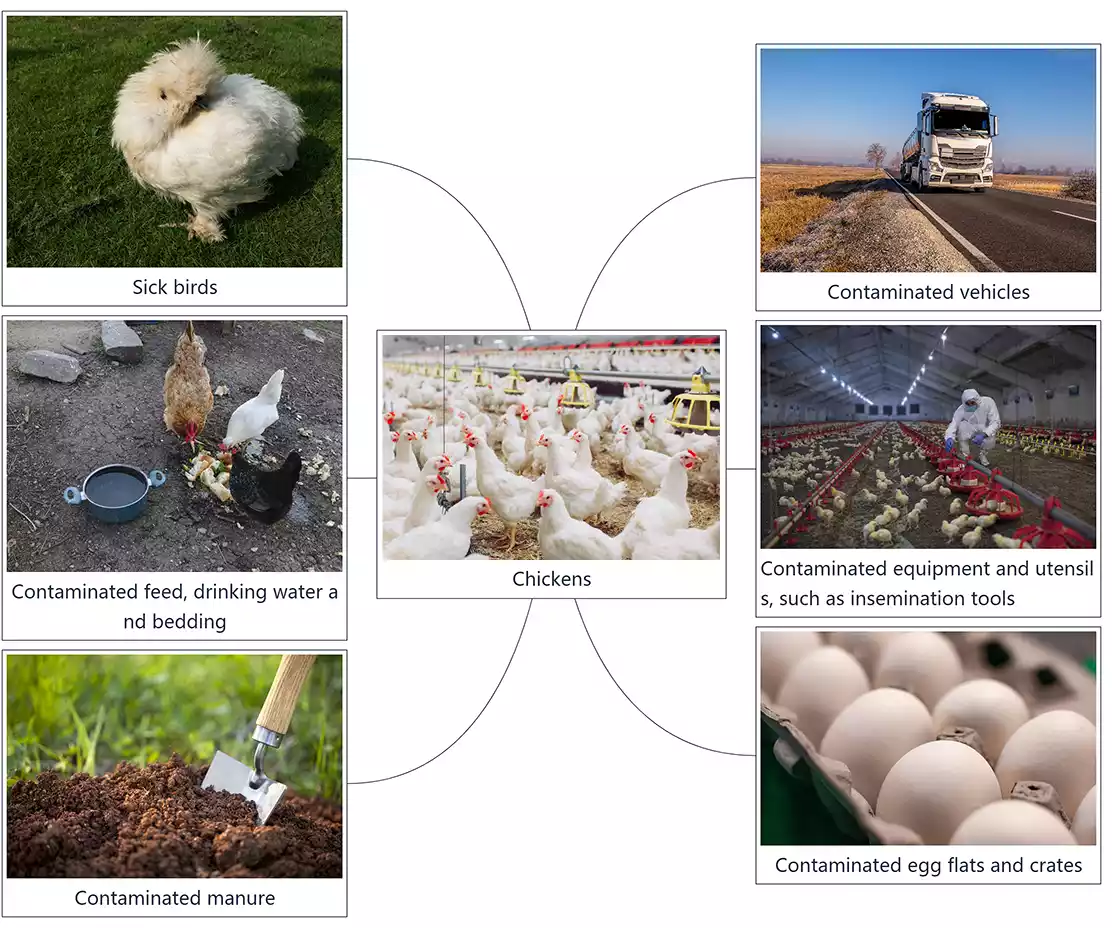
그림 1 뉴캐슬병의 전파 경로
The transmission pathways of Newcastle Disease are complex and varied, making prevention and control difficult. Therefore, strengthening biosecurity measures, such as strict disinfection, isolation and immunization, is the key to preventing and controlling Newcastle disease.
As the saying goes, “prevention is better than cure”, through learning to understand the genotypes of Newcastle Disease and the main strains prevalent in the local area, paying attention to the early symptoms of the disease in chickens, strengthening the daily management, and injecting vaccines at an early stage, the resistance of chickens can be effectively improved, and contribute to the prevention and treatment of Newcastle Disease in chickens.
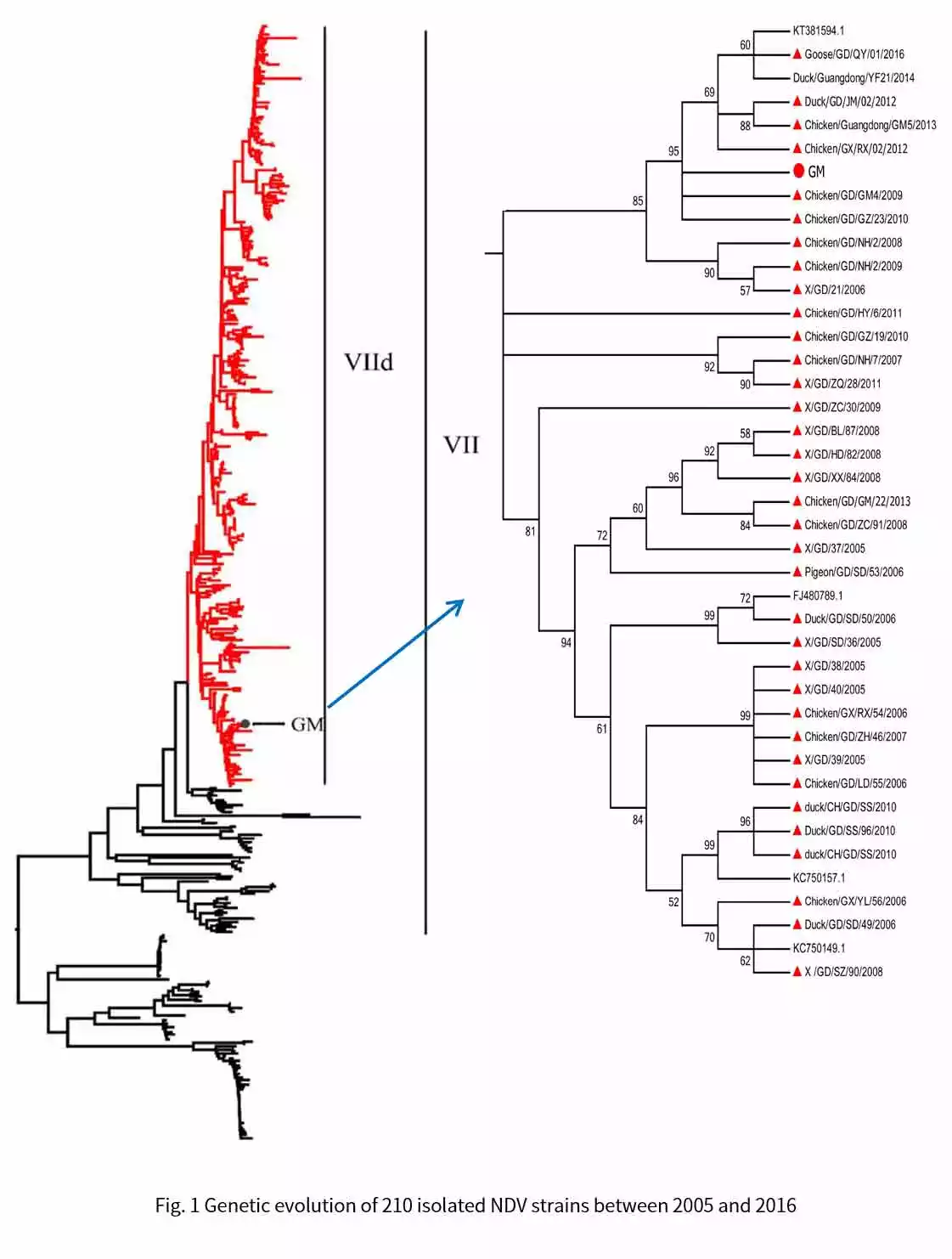
In 1995, Ballagi-Pordang et al. used restriction enzyme digestion analysis to genetically group more than 200 ND strains, which were mainly divided into 6 genetic groups, namely genetic groups Ⅰ, Ⅱ, Ⅲ, Ⅳ, Ⅴ, and Ⅵ. In 1997, lomnjczj and others reported genetic group Ⅶ, and genetic group Ⅷ was found in the progeny of recognized strains isolated in the 1960s in South Africa. Cao Dianjun divided the epidemic NDV genotype Ⅶ into 5 genotypes, namely Ⅶa, Ⅶb, Ⅶc, Ⅶd and Ⅶe. Since the first report of NDV infection in geese in 1997, the Key Laboratory for veterinary vaccine creation of the Ministry of agriculture has been committed to the epidemiological investigation of NDV in South China. Since 2005, 210 strong strains have been isolated, of which 86.2% (181/210) are subtype VII d(Fig. 1).
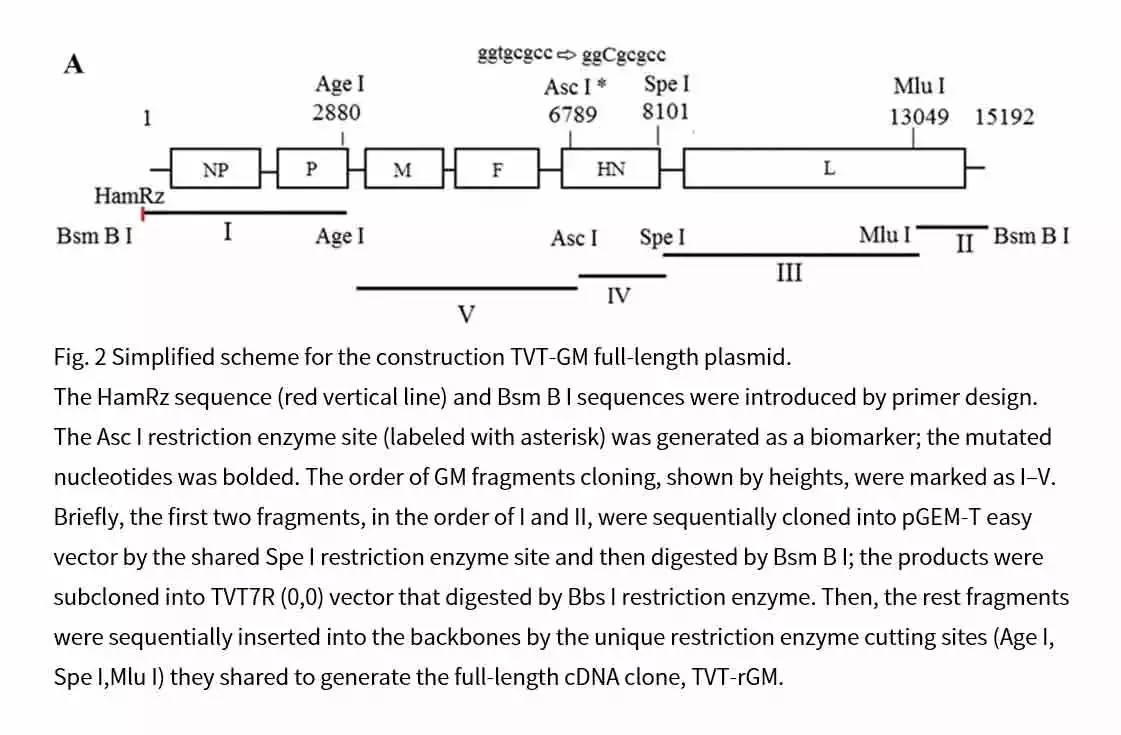
백신 rGM-VII의 성공적인 제작(그림 2 및 3)
To generate authentic 5’ ends of full-length viral antigenomic RNA transcripts, we introduced an overhanging hammerhead ribozyme (HamRz) sequence instead of two or three additional guanidine residues (Gs) at the 5’ terminal into the cDNA clone of GM. To establish a biomarker, an Asc I restriction enzyme site was generated by specific mutagenesis. The schematic cloning strategy is shown in Fig. 2 [1]
To attenuate rGM, the nucleotide sequences of the cleavage site of the TVT-rGM plasmid were modifified from 5’-AGGAGACAAAAACGCTTT-3’ to 5’-GGGAGACAGGGGCGCCTT-3’by PCR mutagenesis, which correspondingly change the motif from 112RRQKRF117 to 112GRQGRL117.
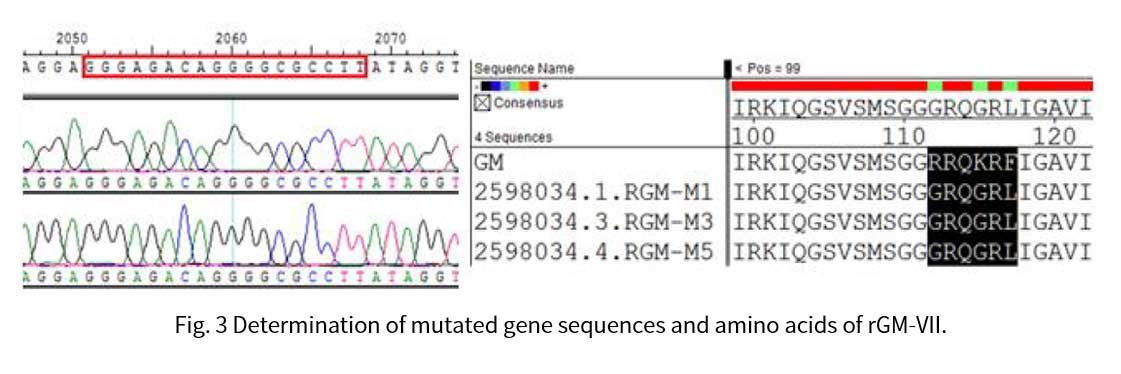
As the circulating NDV of genotype VII is virulent, most strains are not good candidates for vaccine strains. Only those of natural low virulence or those artificially created attenuated strains can be used for the development of vaccines. So to obtain low virulent strains is a key to vaccine development.
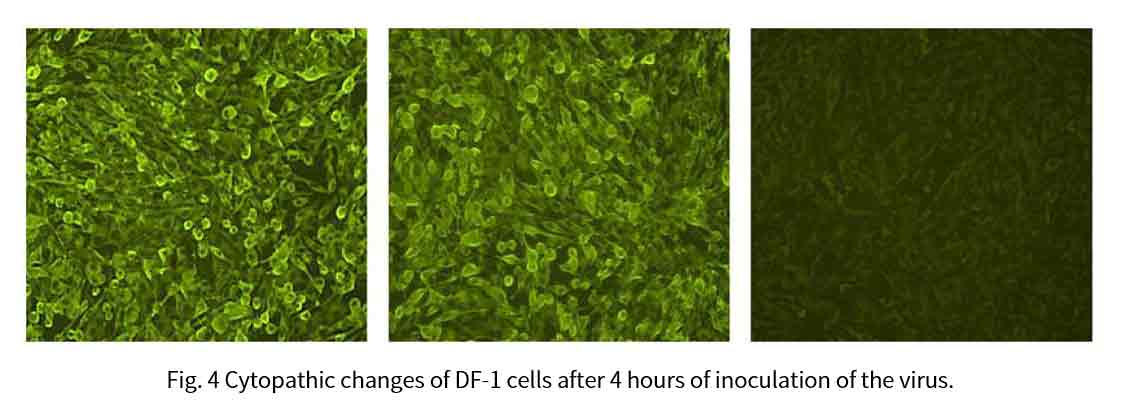
It can be seen that no obvious cytopathic changes occurred after 4 hours of inoculation of the virus to DF-1 cells, indicating that the virulence of rGM-VII was significantly weakened compared with that of the parent strain GM, which laid the foundation for the next step of vaccine development.
rGM-Ⅶ주로 제조한 백신의 면역 효과(0.02mL)
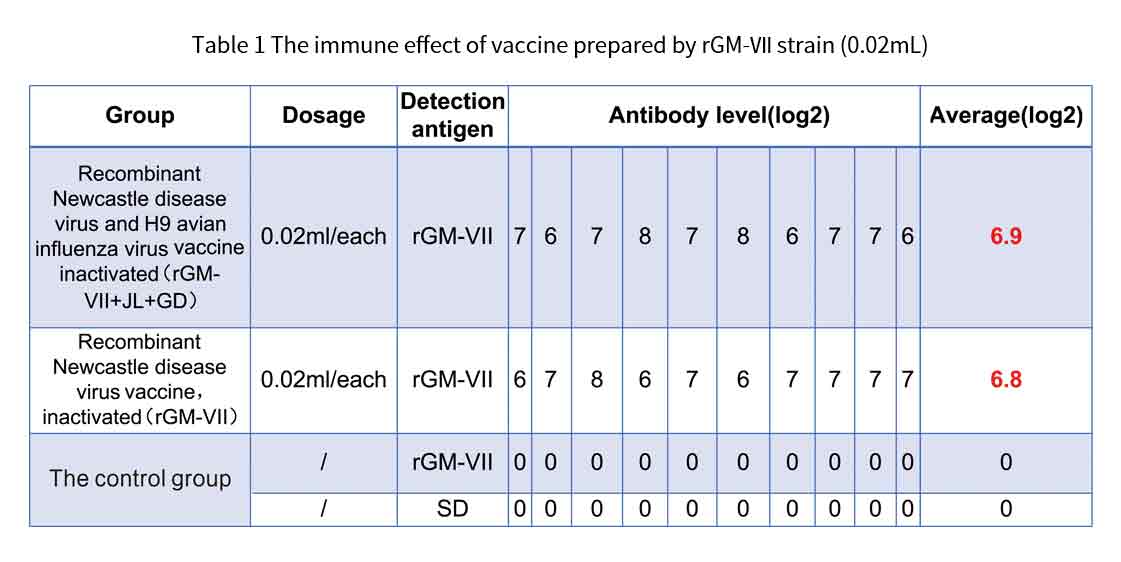
It can be seen that there is little difference in immune effect between single vaccine and combined vaccine prepared by rGM strain. rGM-VII is of good immunogenicity and high antibody titer [significantly higher than the national standard (4.0log2)]
GM주에 대한 rGM -VII 백신의 보호 효과(0.02 ml)
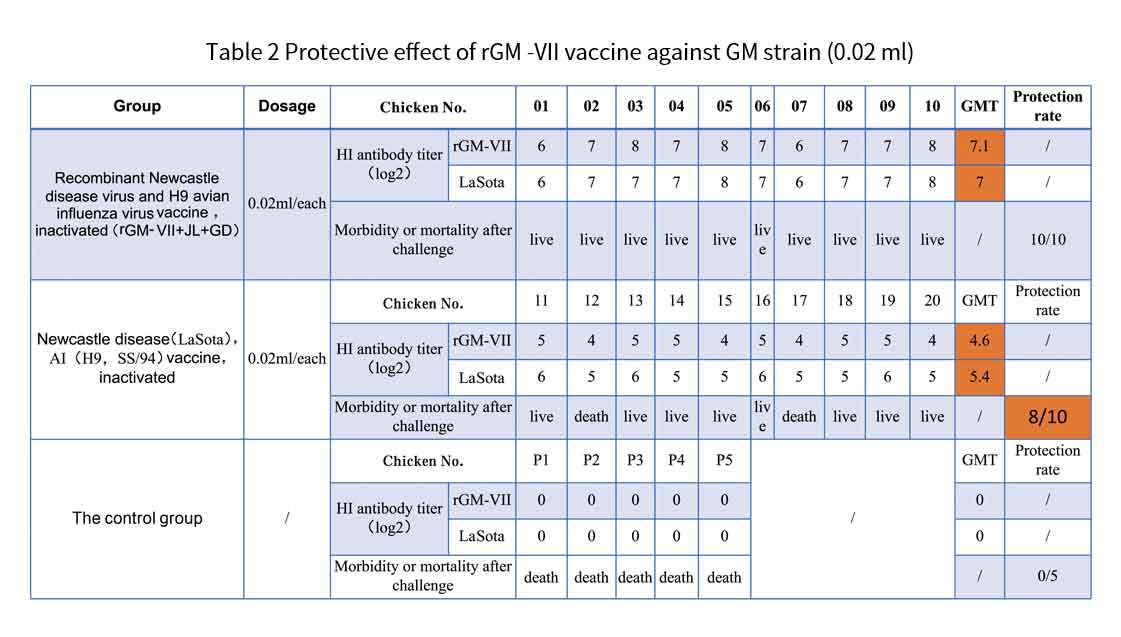
Conclusion: the existing genotype II vaccine can not completely protect the genotype VII epidemic strain. And rGM -VII vaccine strain can provide full protection.
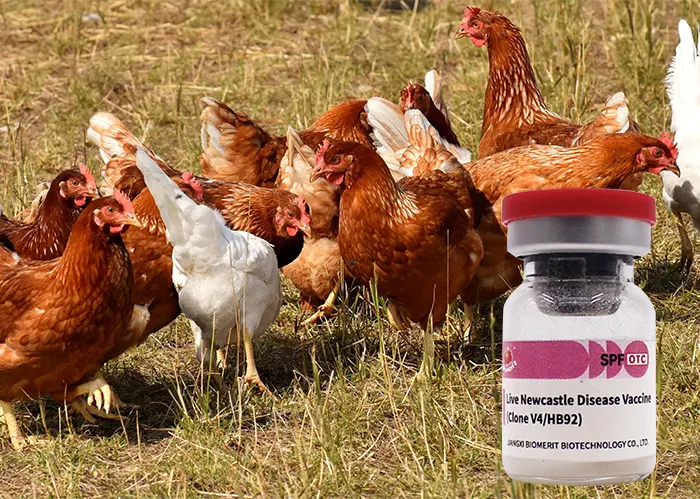
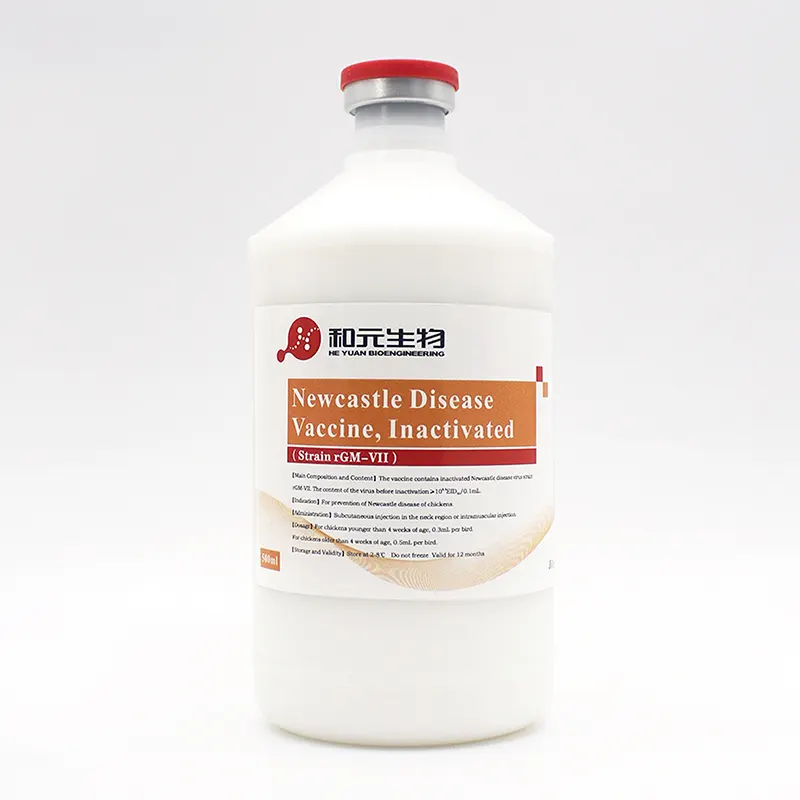
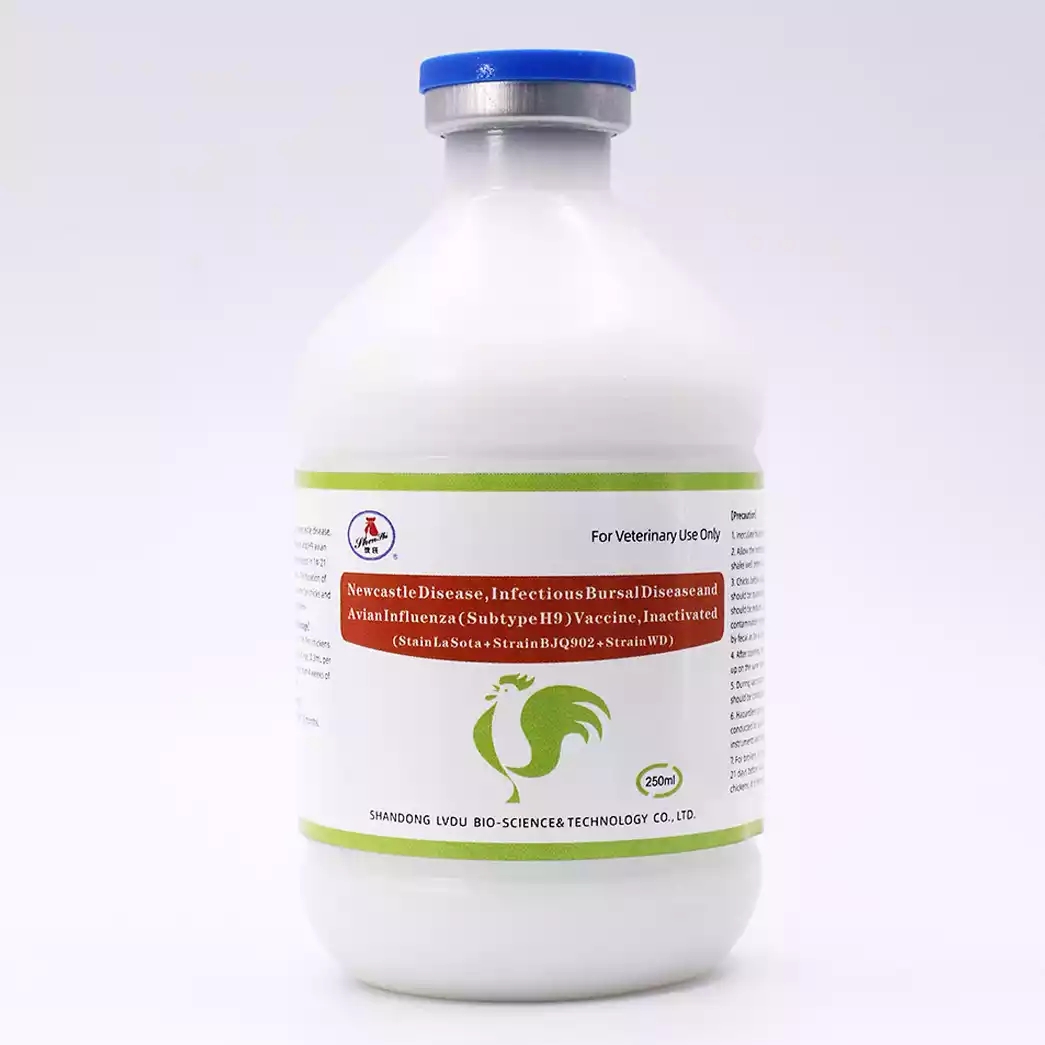
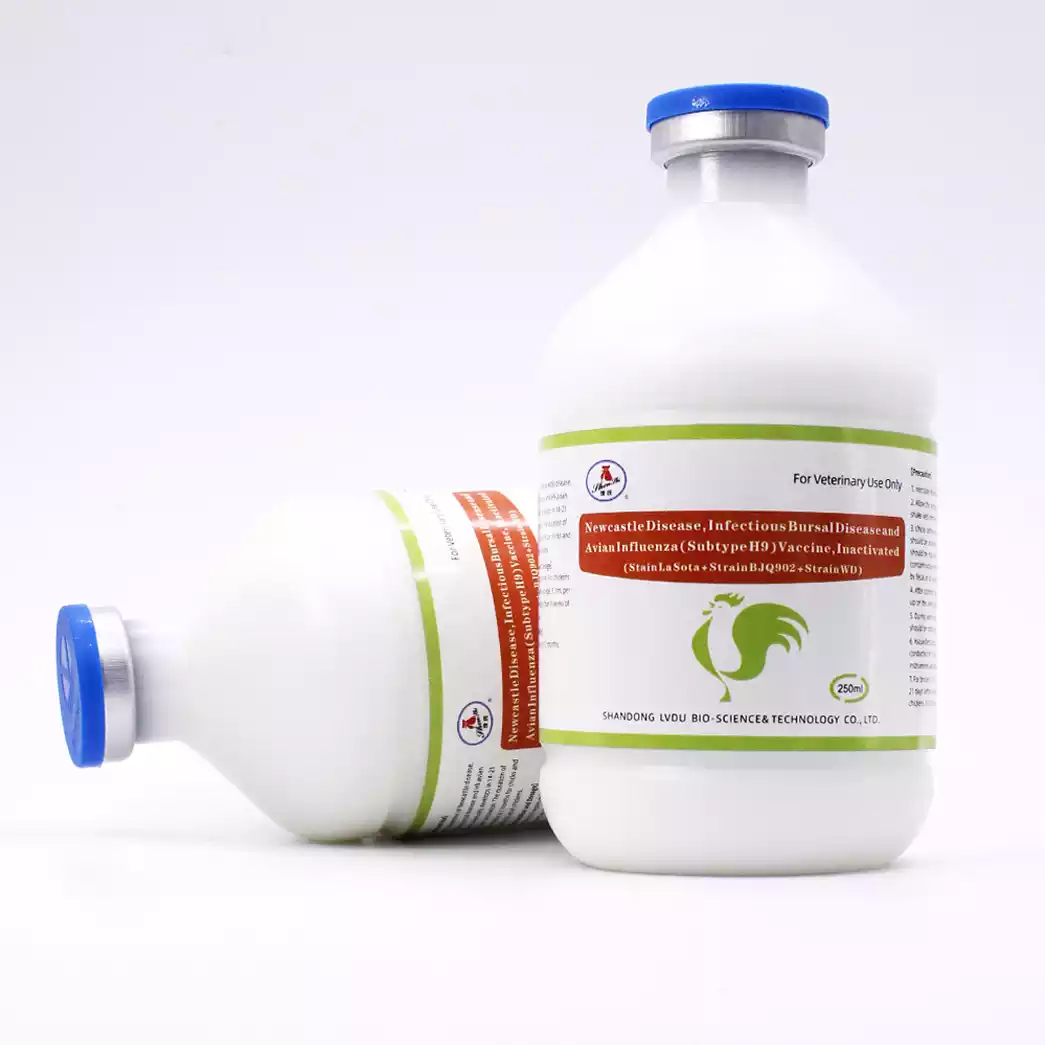
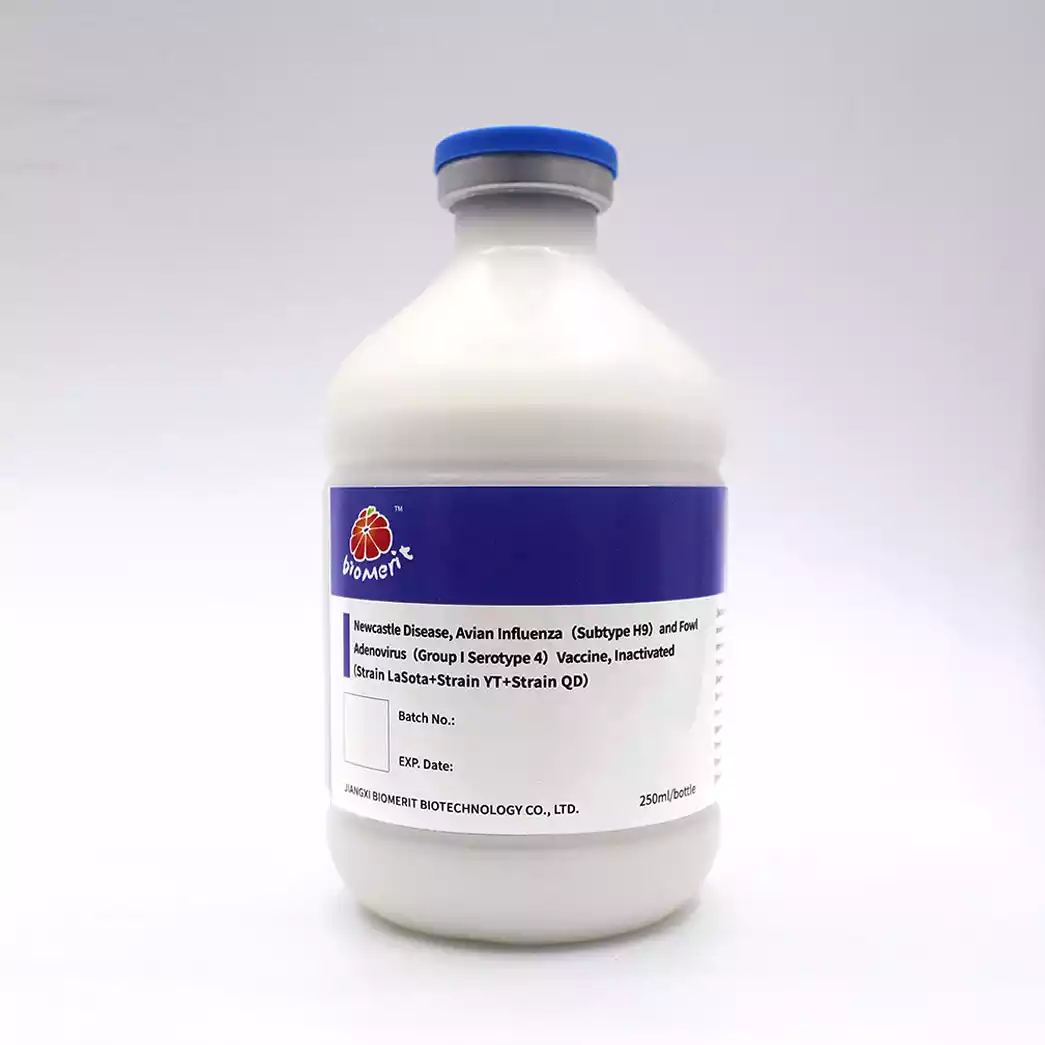
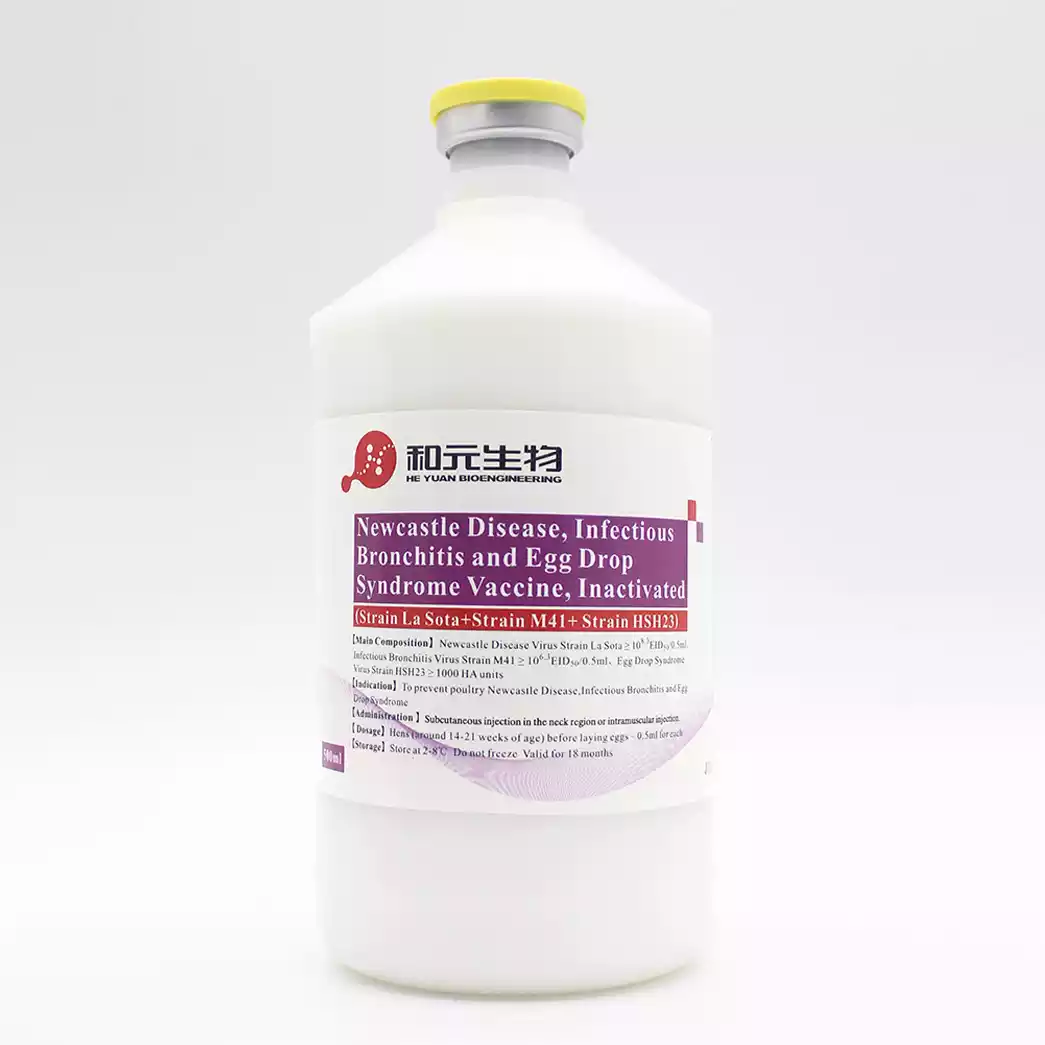
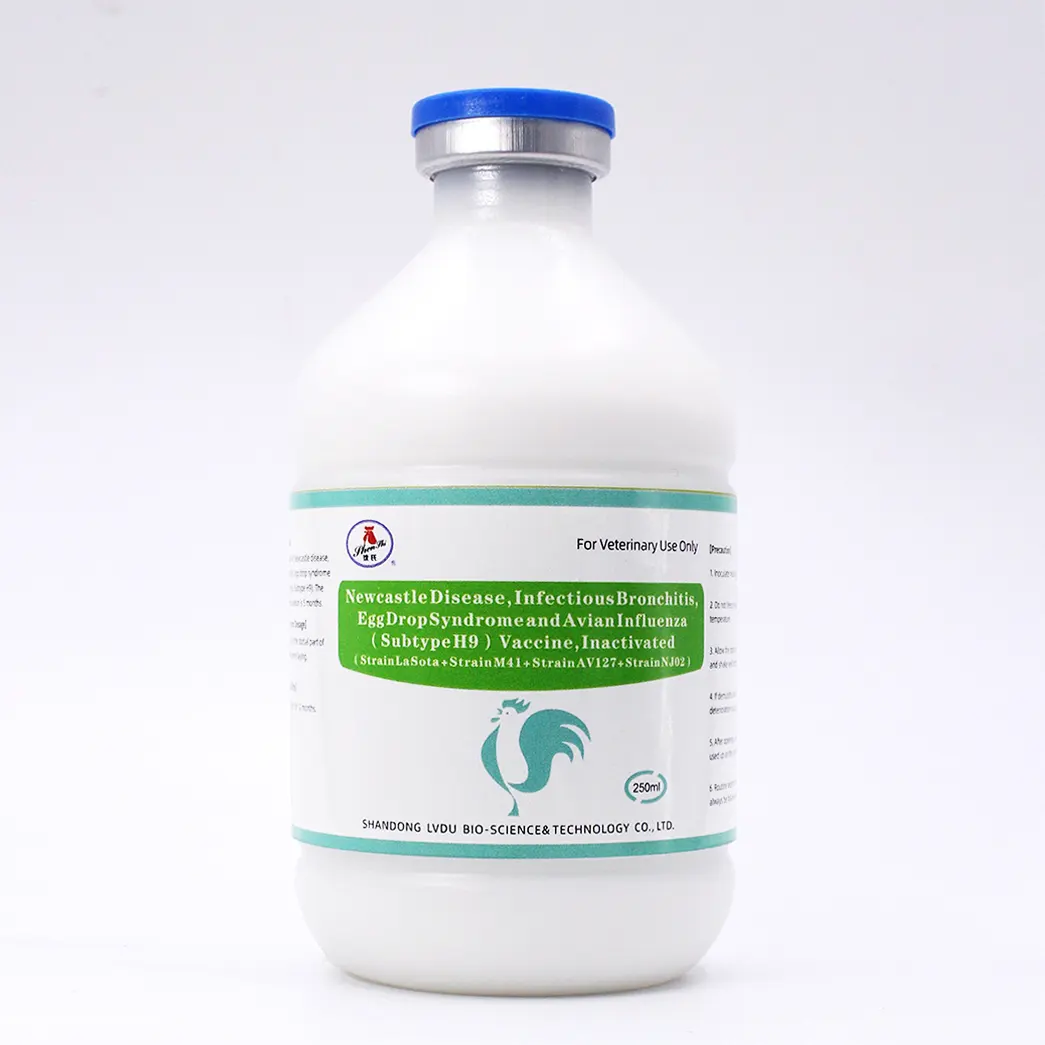
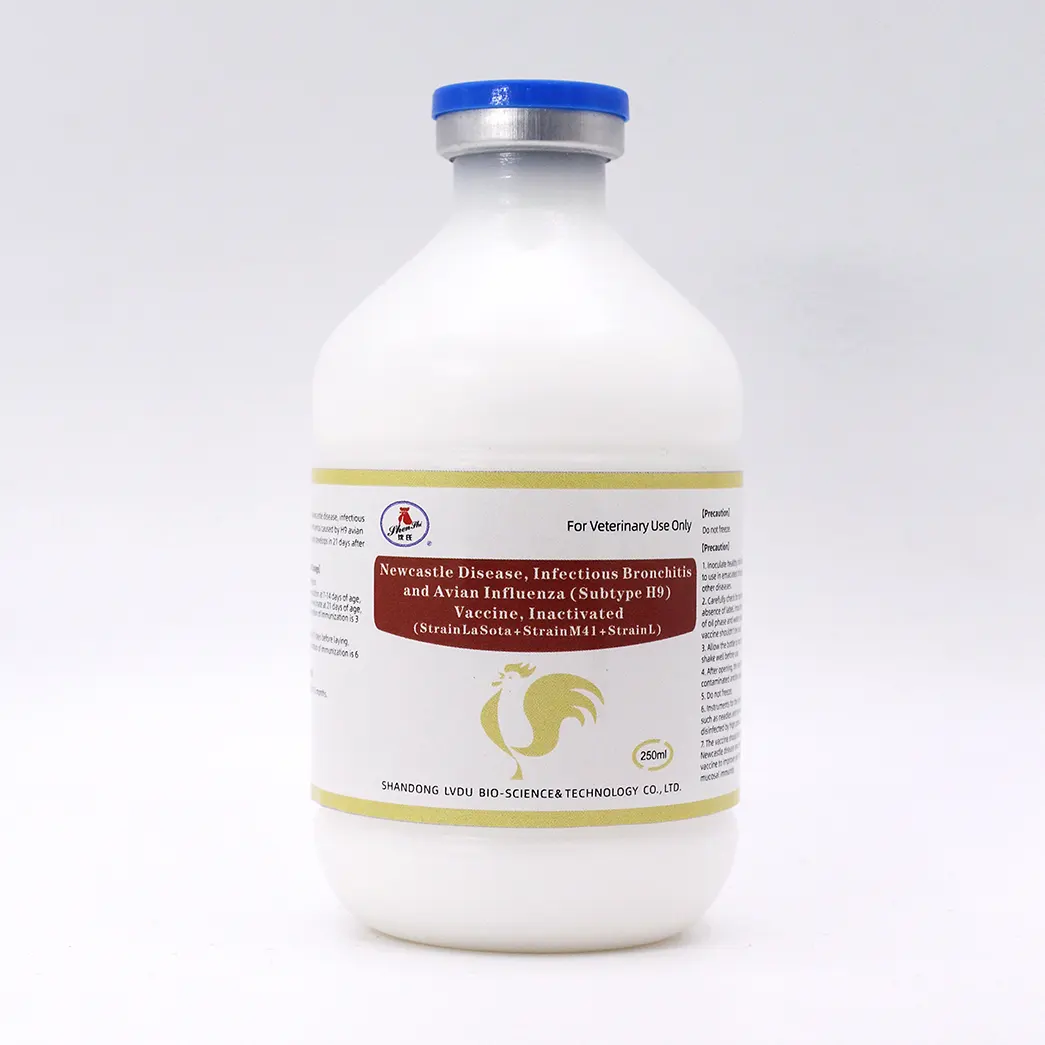
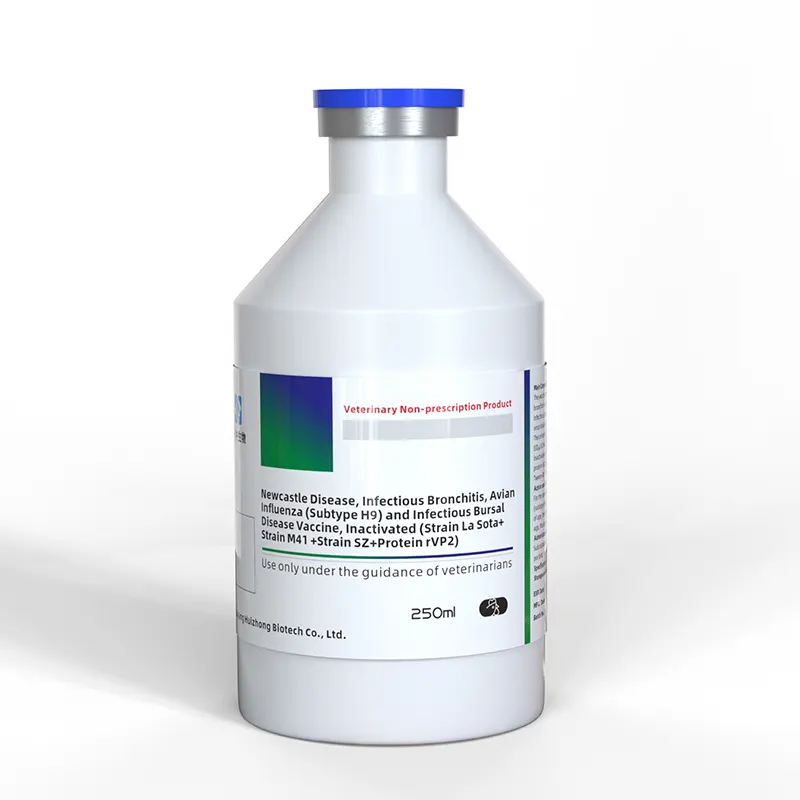
뉴캐슬병 백신 권장 사항
Reference
Minhua Sun, Bin Xiang, et al. Generation and evaluation of a genetically attenuated Newcastle disease virus rGM-VIIm as a genotype-matched vaccine. Virus Genes (2017) 53:35–43