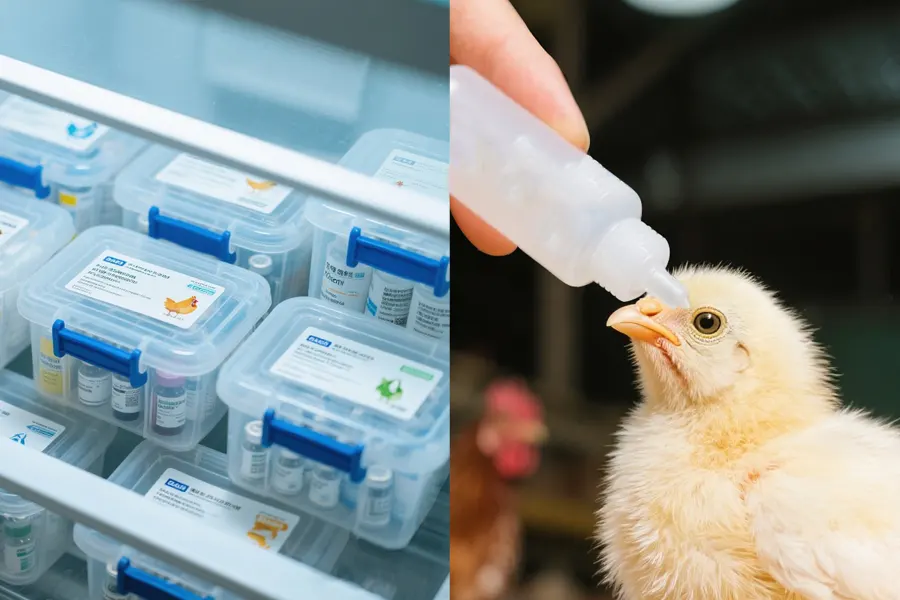
템부수 바이러스 개요
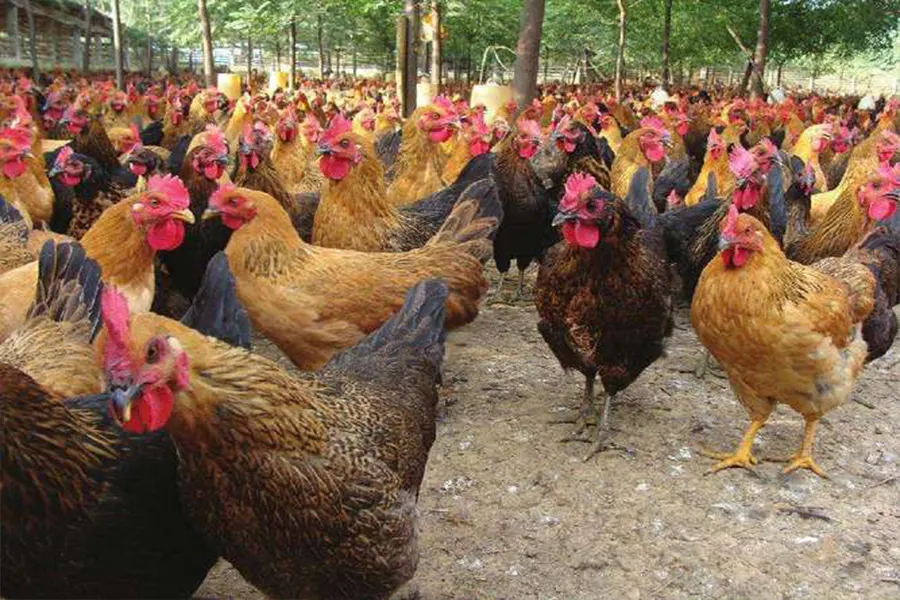
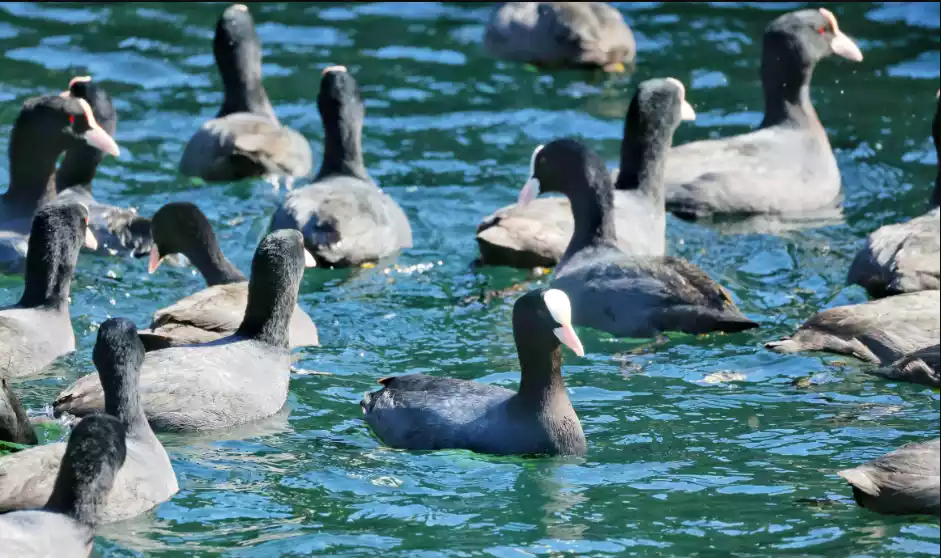
템부수병은 플라비바이러스속 은타야바이러스군에 속하는 템부수 바이러스에 의해 발생하는 전염병입니다. 산란오리의 산란율을 급락시키고(90%에서 10%로, 심지어 완전히 멈추게 함), 오리 새끼의 식욕을 떨어뜨리며 성장을 더디게 합니다. 원래는 ’오리 출혈성 난소염“ 또는 ”오리 바이러스성 뇌염'으로 불렸으며, 2011년 육용오리에서 처음 발견되었습니다. 2012년에는 오리 템부수 바이러스로 확인되었습니다. 지금까지 물새, 상업용 산란계, 종계를 감염시킬 수 있습니다.
템부수 바이러스의 병원성 특성
분류 기준
템부수병은 플라비바이러스과(Flaviviridae), 플라비바이러스속(Flavivirus), 은타야바이러스군(Ntaya virus group)에 속합니다.
형태학적 특징
바이러스 입자는 구형이고 크기는 45~50nm이며, 성숙한 입자는 당단백질 스파이크가 있는 인지질 이중층과 이십면체 대칭을 보이는 뉴클레오캡시드로 둘러싸여 있습니다.
유전체 구조
DTMUV 유전체는 약 11kb, 10,990개의 뉴클레오티드로 이루어진 단일 가닥 양성 센스 RNA 바이러스입니다. 캡시드 단백질(C), prM 단백질(M 단백질의 전구체), 외피 단백질(E)의 3가지 구조 단백질과 NS1, NS2A, NS2B, NS3, NS4A, NS4B, NS5의 7가지 비구조 단백질을 암호화합니다. C 단백질은 아미노산 유사성이 낮고 염기성 아미노산을 많이 함유하며 바이러스 조립을 돕습니다. prM 유전자는 prM 단백질을 생성하고, 이는 성숙 과정을 거쳐 M(막 단백질)이 됩니다. M 단백질은 C 및 E 단백질과 단단히 결합하여 바이러스 패키징을 돕습니다.
병원성 특징
바이러스 입자는 구형으로 크기는 45–50nm이며, 성숙한 입자는 당단백질 스파이크가 있는 인지질 이중층으로 둘러싸여 있고 뉴클레오캡시드는 정이십면체 대칭을 보입니다.
- DTMUV는 에테르, 클로로포름, 디옥시콜레이트에 민감합니다. 열에 약하여 50°C 이상에서 60분이 지나면 활성을 잃습니다.
- DTMUV는 오리 배아, 닭 배아, 오리 배아 섬유아세포 및 Vero 세포에서 증식할 수 있지만 닭 배아 섬유아세포에서는 증식하지 못합니다.
- DTMUV는 주로 감염된 세포의 세포질에서 복제됩니다. 요막강에 주입하면 오리 배아는 3–5일 이내에 폐사하며, 융모요막이 두꺼워지고 부어오르며, 전신 부종, 출혈, 간 비대 및 반점, 괴사가 나타납니다.
역학적 특징
감수성 동물: 이 질병은 물새, 상업용 산란계 및 종계를 감염시킬 수 있습니다.
전파 경로: 수평 및 수직으로 전파되며, 야생 조류와 모기가 중요한 역할을 합니다. 자연적으로 플라비바이러스 속 구성원은 주로 절지동물에 의해 전파됩니다. 70종 이상의 플라비바이러스 구성원 중 30종은 모기 매개이며 11종은 진드기 매개입니다. 이 질병은 연중 발생할 수 있으며 가을과 겨울에 가장 심하게 유행합니다. 조류 역시 전파의 핵심입니다. 바이러스는 총배설강에서 분리될 수 있으며, 이는 분변을 통해 전파되어 환경, 사료, 물, 도구 및 운송 차량을 오염시킨다는 것을 보여줍니다.
유행 특성: 이 질병은 뚜렷한 계절적 패턴이 없고 언제든 발생할 수 있으며, 겨울에는 산란 오리가, 여름에는 오리 새끼가 더 심하게 영향을 받습니다.
발병 기전
Once inside the body, the Tembusu virus mainly attacks vascular endothelial cells, causing viremia and then affecting the spleen, reproductive organs, and brain, with the spleen likely hit first. Early on, the virus is most detectable in blood; later, it’s found in the spleen, ovarian follicles, and brain. It’s also present in the throat and feces of sick ducks. Massive viral replication and cell breakdown products flood the bloodstream, triggering inflammation and toxemia. This leads to body-wide metabolic issues (less eating and egg-laying), fever, organ dysfunction, and structural damage. It can cause necrotic and proliferative splenitis (spleen shrinks early, then swells and darkens), interstitial hepatitis and nephritis, and viral encephalitis.
유해성
The Duck Tembusu virus is highly dangerous to ducklings under 7 weeks, especially those under 2 weeks, with infection and illness rates above 90% and mortality rates of 5%–30%. Ducks aged 2–4 weeks have mortality rates up to 40%, while 5–6-week-olds reach 25%. In growing ducks, harm depends on age: 7–21-week-olds are at risk, especially 7–10 and 18–21 weeks, while 14–16-week-olds resist better. Mortality in 7–8-week-olds is below 10%. Daily egg production may drop 5%–20% in laying ducks, with mortality around 2%–5%. The disease spreads fast, often infecting a whole flock in 2 days. It can also spread vertically, lowering hatching rates, increasing dead embryos, and causing weak ducklings.
TMUV 병원성 분석
Isolates from 2012 showed no significant genetic differences from 2010–2011. In September 2019, an isolate from Jinyun, Zhejiang, in Ma ducks had a clinical mortality rate of about 60%. Confirmed as Tembusu virus via PCR, it was named JS201909. SPF chicken embryo tests showed an ELD50 of 10⁻⁵.⁴³, more potent than the traditional virulent strain ZJ407 (ELD50 ~10⁻³). Genetic analysis showed differences from earlier duck-derived Tembusu isolates, with closer ties to recent southern China isolates and striking similarity to Thai isolates, calling for tighter monitoring to prevent cross-border spread. Since 2023, NS5 gene analysis of 22 Tembusu virus strains showed homology above 98%.
템부수 바이러스 유행 현황
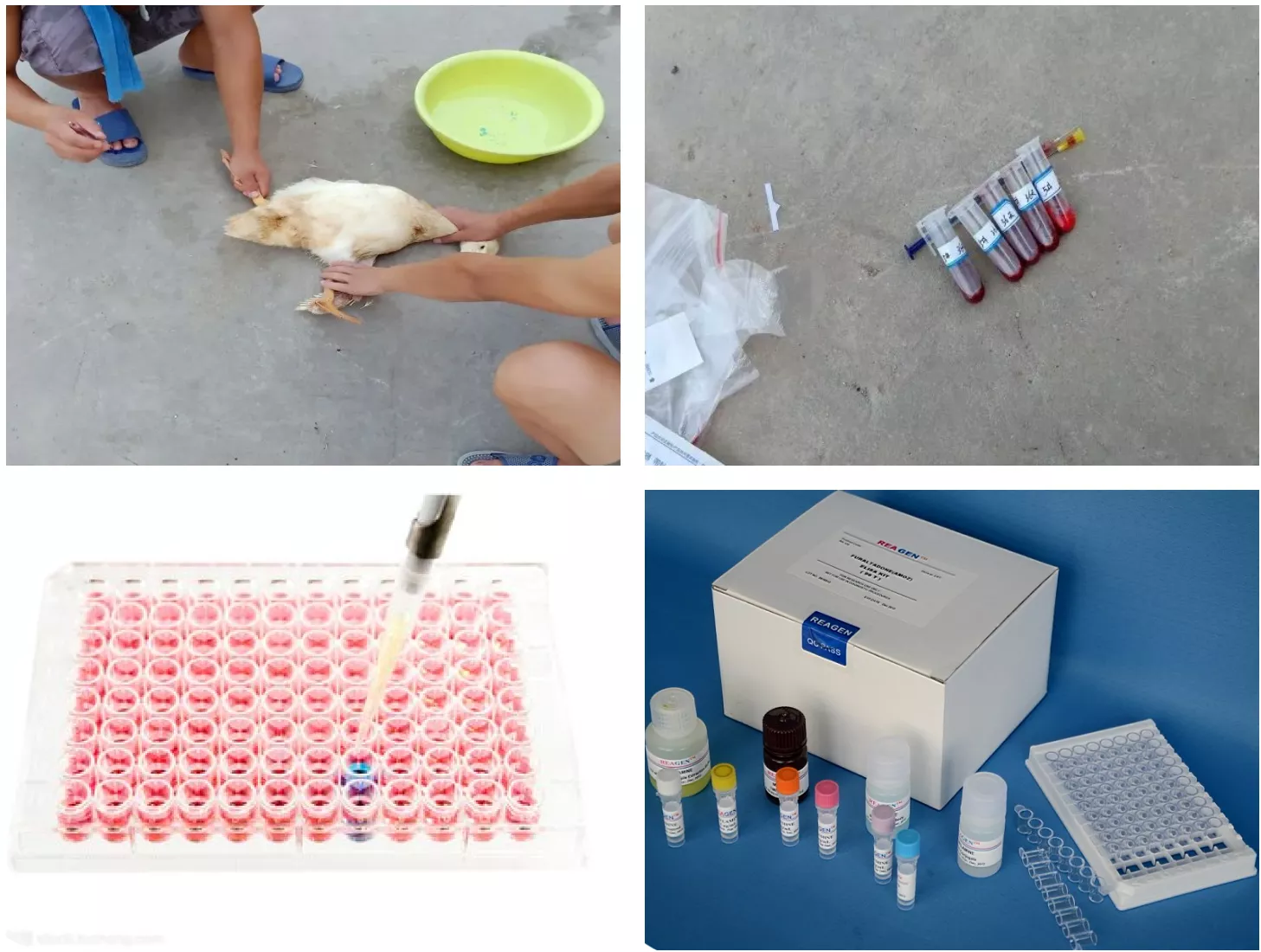
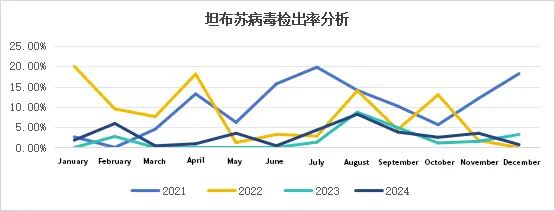
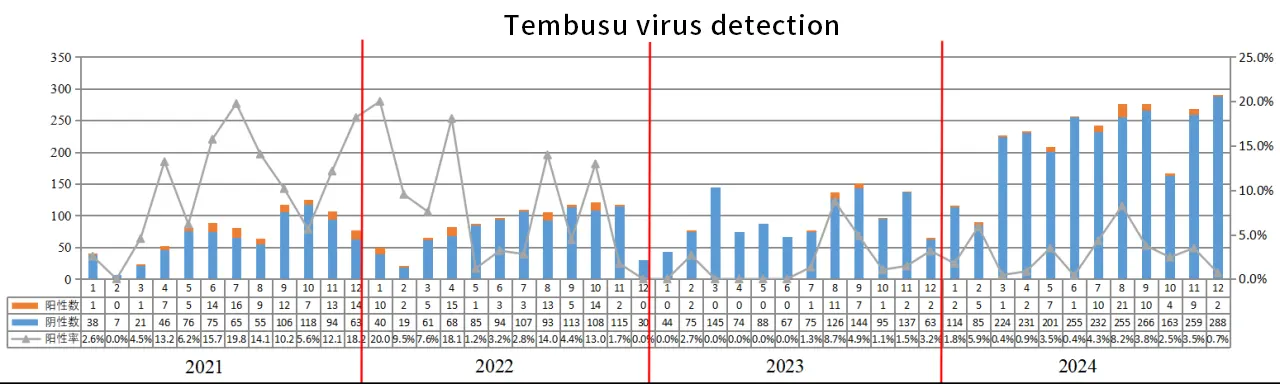
Detection Rates Since 2021, Tembusu virus positivity rates have dropped thanks to widespread vaccine use. In 2024, of 2,647 samples tested, 2,573 were negative, and 74 were positive, giving a positivity rate of 2.8%. Waterfowl faced high disease rates in February, April, August, and November 2024, needing extra caution.
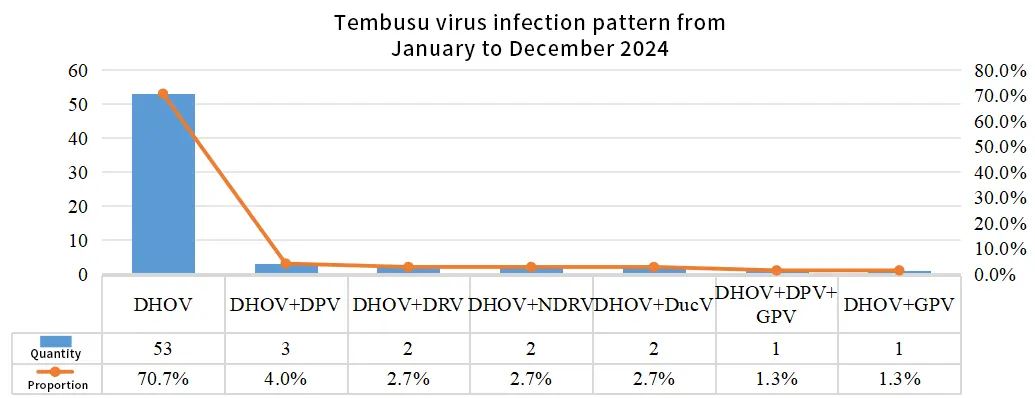
Infection Patterns In 2024, Tembusu virus infections were mainly single, with 17 types of mixed infections noted.
임상 발현
Clinical signs in ducks vary by infection stage:
Within 1 week: High mortality in ducklings, with infections causing ~20% deaths.
3–5 weeks: Culling rates of 5%–10%, up to 30% in severe cases, with secondary infections pushing mortality to 60%; stunted growth in meat ducks.
Laying period: Ducks eat 30%–60% less, egg production crashes by 10%–90%, mortality is low at 5%–15%, with an average loss of 15–20 eggs per duck, costing 45–60 yuan per duck.
Breeder ducks/geese: Fertilization and hatching rates of eggs drop by ~10% during infection.
임상 징후
The sharp drop in egg production: Laying ducks produce far fewer eggs, losing an average of 15–20 good eggs daily.
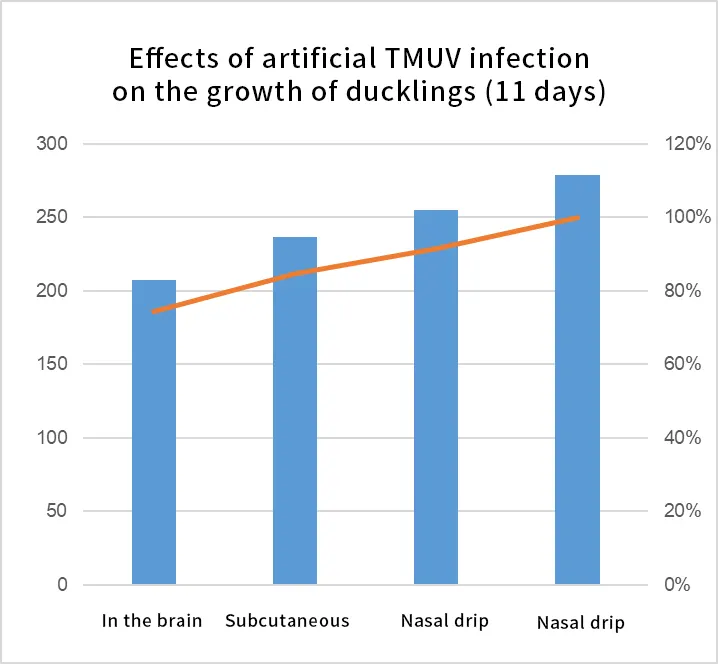
Stunted growth in ducklings: Ducklings infected at 1 day old gain 10%–20% less weight by 11 days.
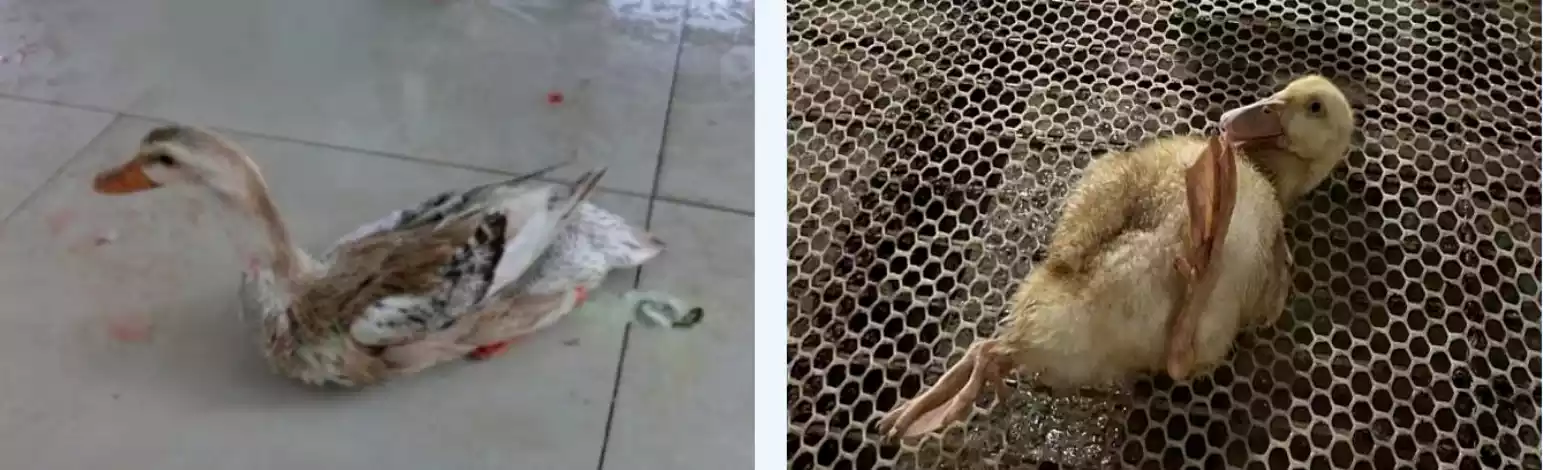
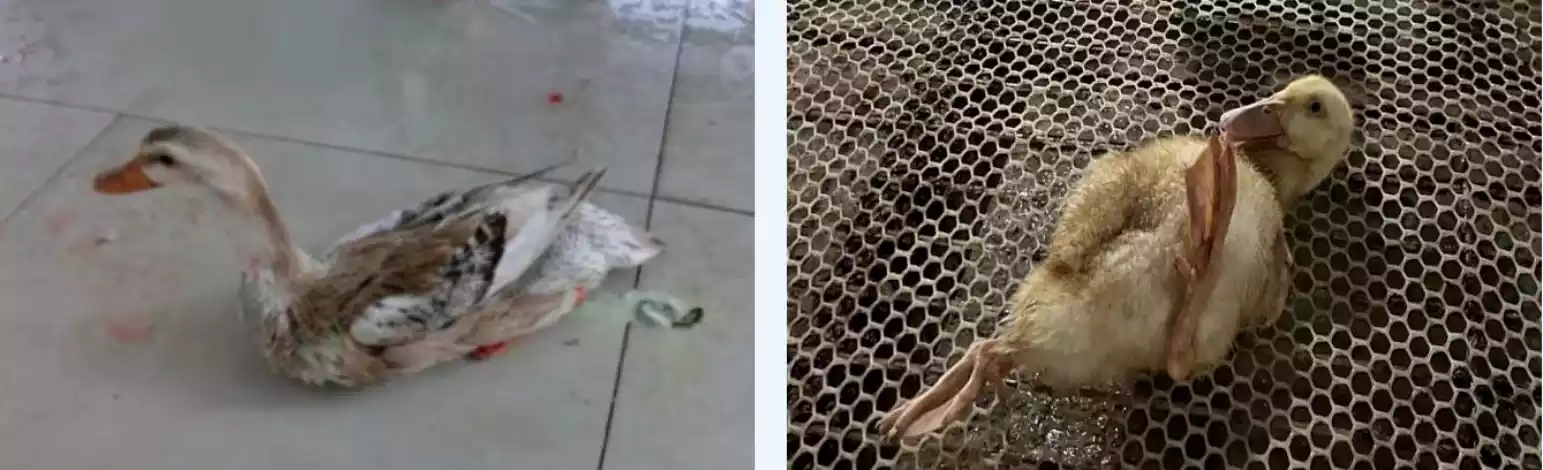
Soft legs and digestive issues: Sick ducks have weak legs and pass green feces.
Neurological symptoms: Infected ducks and geese show paralysis and lack of coordination.
오리 템부수병의 부검 소견
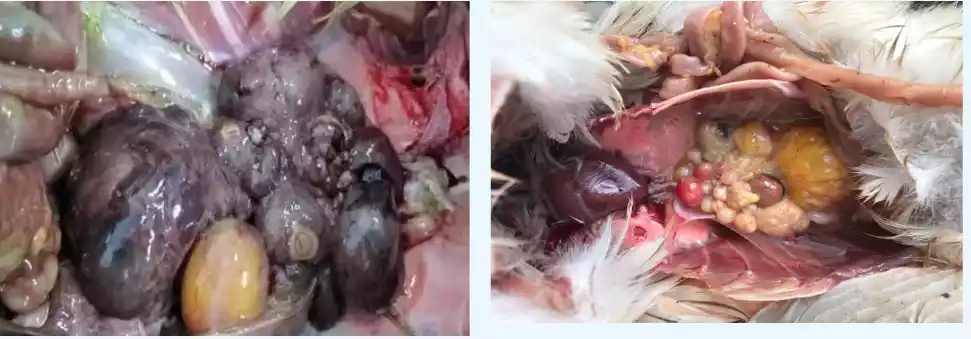
Ovarian Lesions: Follicular bleeding. Follicular liquefaction.
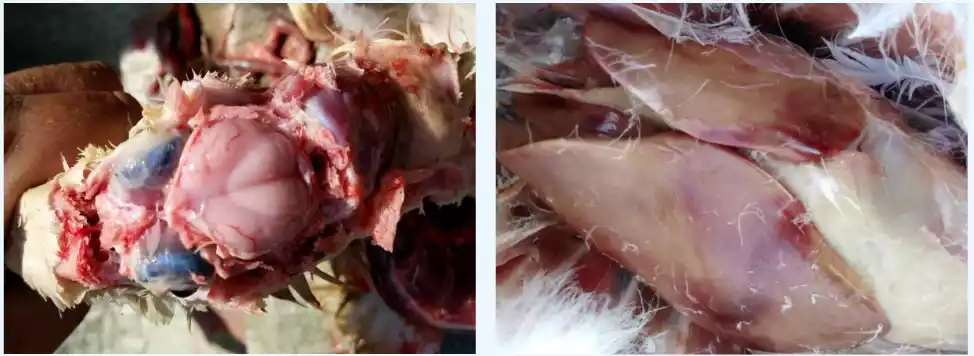
Brain Lesions: Branch-like bleeding. Brain tissue swelling.
Liver Lesions: Swollen liver with bleeding and a thinned surface showing mottled necrosis.
Heart Lesions:
- Thickened heart muscle.
- Yellow fluid at the heart base.
- Damage in the heart’s inner lining.
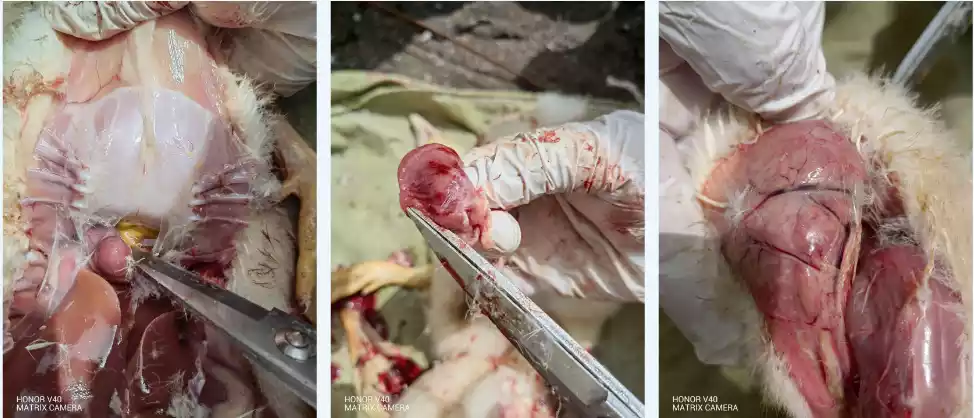
Other: Thymus shrinkage.
방제 대책
Biosecurity Control Using standard disease control methods tailored to the Tembusu virus, set up practical biosecurity steps.
우량 종축 선발
Choose breeder ducks with potent maternal antibodies (e.g., vaccinated with “one live, two inactivated” or “three inactivated” vaccines) to shield ducklings from early wild virus infections.
Maternal Antibody Decline Patterns
South: Full protection before 10 days, negative by 15 days.
North: Negative by 18 days.
전파 경로 차단
Environmental Hygiene:
- Set up a solid disinfection routine, regularly cleaning farms and nearby areas.
- Clear sewage and trash, removing hygiene dead zones.
Mosquito and Fly Control: Cut down mosquito breeding and wipe out mosquitoes and flies on duck farms (leading virus carriers).
Equipment and Egg Management:
- Strictly disinfect tools, equipment, transport vehicles, and hatching eggs.
- Quickly burn or biologically process dead ducks; immediately disinfect contaminated areas and tools.
Stress Reduction: Watch weather changes during vaccination, using cold-proof and insulation measures.
Disinfection Measures: The virus is sensitive to acids, ether, deoxycholate, trypsin, and high heat; pick disinfectants suited for farms.
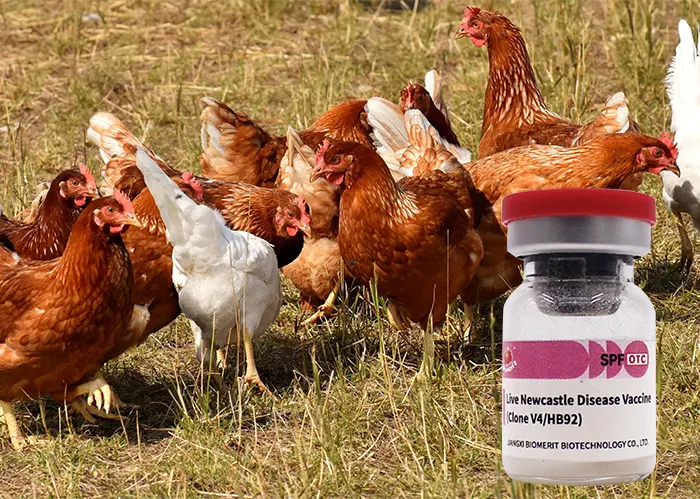
백신 접종 프로그램
Recommended vaccination schedules by duck type and age:
육용오리, 마압, 머스코비오리
Slaughter >40 days: 5–7 days, Tembushu vaccine (0.3 ml/duck).
Slaughter <40 days: 5–7 days, Yahuangping vaccine (1 dose).
산란오리
5–7 days: Tembushu vaccine (0.3 ml/duck; in high-risk areas, add Yahuangping vaccine, one dose).
28 days: Tembushu vaccine (0.5 ml/duck).
2 weeks pre-laying: Tembushu vaccine (0.8 ml/duck).
종오리
7–12 days: Tembushu vaccine (0.3 ml/duck; in high-risk areas, add Yahuangping vaccine, one dose).
28–33 days: Tembushu vaccine (0.5 ml/duck).
2 weeks pre-laying: Tembushu vaccine (1.0 ml/duck).
상업용 거위
1 day: Yahuangping vaccine (1.2 doses).
종거위
10 days: Yahuangping vaccine (1.5 doses).
50 days: Tembushu vaccine (0.8 ml/goose).
2 weeks pre-laying: Tembushu vaccine (1.0 ml/goose).
면역력 강화
약물 보조 요법
5–7 days: Use Fanyiping + Kangtiyou (1 set per 1,000 ducks, 2 days) to boost antiviral defenses.
16–20 days (immune gap):
Kangtiyou: 1 bottle/1,000 ducks, 3 days.
Kanglineng: 1 bag/2,000 kg water, 5 days.
Benefits: Eases immune suppression, strengthens antiviral defenses, and boosts overall flock resistance.
벤치마크 사례 연구
광시 그룹
Used 조류 인플루엔자 백신 + Tembusu inactivated vaccine + ceftiofur (Beifuxin) for combined immunization.
결과
21 days post-immunization: Antibody level 6log2, Flavivirus antibody positivity rate 93.3%.
31 days post-immunization: Antibody level 7log2, positivity rate 100%.
After 20 days: Lower culling rates, better leg strength, higher survival, better feed-to-meat ratio, increased weight, and more significant profits.
Promotion: Rolled out fully from September 2021, topping breeding results 2022.
방제 우선순위
High-Risk Periods: Boost monitoring and vaccination in February, April, August, and November.
High-Risk Areas: Anhui, Guangdong, and Jiangxi need stronger biosecurity and immunization.
Virus Mutation: Watch for strain changes (e.g., more substantial 2019 JS201909 strain) and ramp up testing to stop cross-border spread.